
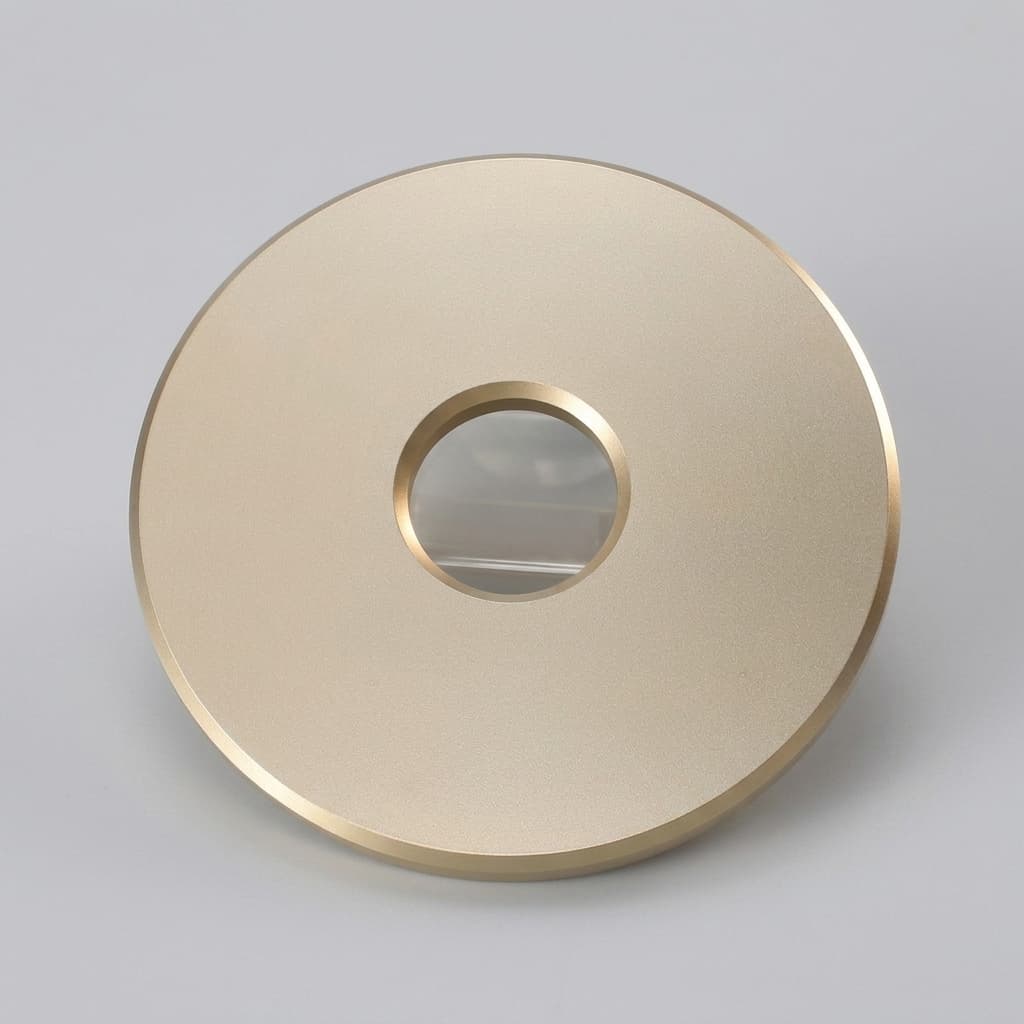
TaC vs. SiC Coated Graphite for 8-Inch SiC Crystal Growth: A Procurement Guide
Compare TaC vs. SiC coated graphite for 8-inch SiC PVT growth: thermal limits, contamination risk, lifecycle cost, RFQ checks, and supplier qualification.
As the semiconductor industry aggressively transitions from 6-inch to 8-inch Silicon Carbide (SiC) wafers to support the booming electric vehicle (EV) and high-power electronics markets, the demands placed on crystal growth equipment have reached unprecedented levels. The Physical Vapor Transport (PVT) method, the industry standard for growing SiC boules, requires sustained temperatures exceeding . At these extreme temperatures, the hot zone consumables-specifically the graphite crucible and its protective coating-become the primary limiting factors for crystal yield, purity, and production continuity.
Scope and limits: This guide was prepared on July 20, 2026 for global procurement teams, crystal-growth engineers, and supplier-quality teams evaluating graphite hot-zone consumables for 6-inch to 8-inch SiC PVT programs. It is an RFQ and qualification framework, not a universal process guarantee. The recommendations below assume high-purity isostatic graphite substrates, CVD-applied coatings, buyer-side thermal modeling, coupon inspection, and furnace-specific validation before production release.
Executive Summary (Key Takeaways)
- The High-Temperature Bottleneck: In high-vapor PVT zones, SiC-coated graphite can lose coating thickness, develop micro-cracks, or expose the substrate as run temperature and duration increase.
- The TaC Advantage: Tantalum Carbide (TaC) coatings provide a higher thermal ceiling and stronger resistance to silicon-rich vapor exposure, making them a serious candidate for prolonged 8-inch SiC growth cycles.
- Total Cost of Ownership (TCO): TaC coatings require higher upfront spend, so the business case depends on verified run life, lower coating-related scrap, and reduced maintenance downtime in the buyer's own reactor.
For procurement teams and materials engineers, the decision to upgrade from standard SiC-coated graphite to premium TaC-coated graphite is not merely a line-item expense; it is a strategic investment in wafer yield. This deep-dive guide explores the material science, thermomechanical properties, and procurement economics behind TaC and SiC coatings, providing a definitive roadmap for optimizing your crystal growth operations.
1. The Core Problem: Silicon Vapor Attack in PVT
To understand why a protective coating is necessary, we must first examine the harsh environment inside a SiC PVT reactor. The process involves sublimating SiC powder at the bottom of a crucible and allowing the vapor to condense on a cooler seed crystal at the top.
The Vulnerability of Bare Graphite
While high-purity isostatic graphite provides excellent structural integrity and high-temperature strength, it is inherently porous and susceptible to chemical attack. At temperatures above , the sublimated silicon (Si) and carbon (C) vapors are highly reactive. Silicon vapor, in particular, will infiltrate the open pores of bare graphite, reacting to form localized silicon carbide deposits within the graphite matrix.
Because SiC and graphite have different Coefficients of Thermal Expansion (CTE), these internal deposits expand and contract at different rates during thermal cycling. This induces massive internal shear stress, causing the graphite to swell, crack, and eventually flake—a phenomenon known as "silicon-vapor attack."
The Limitations of SiC Coating
To seal the graphite pores, the industry standard has been to apply a layer of Silicon Carbide via Chemical Vapor Deposition (CVD). This creates a dense, impermeable barrier. However, SiC coating has a fatal flaw in the context of 8-inch SiC PVT: its own sublimation point.
As the PVT process pushes temperatures toward to maintain adequate growth rates for massive 8-inch boules, the SiC coating itself begins to sublimate. The coating slowly thins out over successive runs, eventually exposing the underlying graphite to the aggressive silicon vapor. Once the coating is breached, the crucible is compromised, risking catastrophic yield loss due to carbon inclusion defects in the growing crystal.
2. What is TaC (Tantalum Carbide) Coating?
Tantalum Carbide (TaC) is an ultra-high-temperature ceramic (UHTC) known for its extreme melting point and exceptional chemical stability. When applied as a coating on high-purity graphite substrates via CVD, TaC fundamentally alters the performance boundaries of the crucible.
The CVD TaC Process
Unlike thermal spray or physical deposition methods, Chemical Vapor Deposition of TaC ensures a conformal, highly dense, and highly pure layer that seamlessly bonds with the underlying graphite matrix. The CVD process is carefully controlled to create a specific columnar grain structure that maximizes resistance to chemical penetration while maintaining enough flexibility to accommodate minor thermal expansions.
The resulting TaC-coated graphite is much more resistant to silicon vapor attack than conventional SiC-coated graphite in high-temperature PVT service. In a qualified hot-zone design, TaC can preserve coating integrity over longer growth cycles, but the result still depends on substrate grade, coating thickness, geometry, thermal gradients, and handling damage control.
3. TaC vs. SiC Coating: A Technical and Procurement Comparison
To facilitate objective decision-making, we have mapped the critical parameters that procurement engineers must evaluate when choosing between SiC and TaC coated graphite components.
| Specification / Metric | CVD SiC Coated Graphite | CVD TaC Coated Graphite | Procurement / Engineering Implication |
|---|---|---|---|
| Maximum Operating Temperature | Practical risk rises in PVT vapor exposure | Often qualified for hotter class hot zones | TaC should be reviewed when SiC coating wear, source vapor attack, or extended run time becomes the bottleneck. |
| Resistance to Silicon Vapor | Moderate (Coating degrades over time) | Excellent (Inert to Si and C vapors) | TaC drastically reduces the risk of mid-run crucible failure and carbon flaking. |
| Thermal Emissivity () | Lower, relatively constant | Higher, requires hot zone recalibration | Engineers must adjust PVT thermal models when switching to TaC to maintain the correct radial temperature gradient. |
| Coating Density & Porosity | Dense, but susceptible to micro-cracking | Ultra-dense, highly conformal | TaC seals the graphite more effectively, blocking trace metal impurities (Ash) from leaching into the crystal. |
| Typical Lifespan (PVT Runs) | runs in aggressive recipes (buyer-dependent) | runs when coating and handling are qualified | Do not buy on vendor lifetime claims alone; qualify with coupons, cross-sections, and post-run visual inspection. |
| Relative Component Cost | Baseline () | Premium () | TaC requires higher upfront CapEx but can yield a lower Total Cost of Ownership (TCO) per successful boule. |
| Ideal Application Scope | 4-inch / 6-inch SiC PVT, Epitaxial Susceptors | 8-inch SiC PVT, AlN PVT, Advanced MOCVD | Match the coating to the specific generation of crystal growth technology your facility employs. |
Decision rule: Keep SiC-coated graphite when the process is already yield-stable, coating recession is not a recurring failure mode, and the thermal budget stays within the supplier's qualified window. Qualify TaC coated graphite crucibles when 8-inch PVT run length, silicon-vapor attack, carbon inclusions, or impurity migration are limiting yield. Treat thermal-model recalibration as part of the purchase, not an afterthought.
4. How TaC Impacts 8-Inch SiC Crystal Yield
The transition from 6-inch to 8-inch SiC wafers is not linear; it is exponential in its complexity. As the crucible diameter increases, maintaining a stable, uniform temperature gradient becomes exponentially more difficult. The thermal mass is larger, the growth cycles are significantly longer, and the margin for error shrinks to near zero.
Defect Reduction
Macroscopic defects such as Micropipes (MP) and Basal Plane Dislocations (BPD) are the primary enemies of high-voltage SiC power devices. Many of these defects nucleate from carbon inclusions—microscopic flakes of graphite that detach from the crucible wall and embed themselves in the growing crystal face.
Because a qualified TaC coating reduces direct exposure of the graphite wall during PVT service, it can remove one major source of carbon particulate contamination. This can reduce inclusion-driven defect risk, provided the coating remains intact through handling, loading, growth, and cooldown.
Impurity Blocking (The Ash Factor)
As discussed in our guide on evaluating high-purity graphite, trace metals (ash) within the graphite substrate can ruin the electrical properties of the semiconductor. While high-quality isostatic graphite is halogen-purified to ppm ash, even microscopic trace metals can be problematic over a 7-day 8-inch growth cycle.
A dense CVD TaC coating acts as a low-permeability barrier around the graphite. It helps reduce the chance that residual impurities in the substrate migrate into the growth chamber and contaminate the SiC boule, but it should be paired with substrate purification and post-coating impurity reporting rather than used as a substitute for them.
Edge Stability
In 8-inch growth, the "edge" of the boule is notoriously difficult to control due to thermal edge effects and parasitic nucleation on the crucible walls. The chemical inertness of TaC prevents the SiC vapor from nucleating and adhering strongly to the crucible sides. This promotes a smoother, more controlled boule expansion and prevents the boule from cracking during the cool-down phase due to mechanical locking with the crucible wall.
5. Thermal Management: The Emissivity Factor
One of the most critical engineering considerations when switching from SiC-coated to TaC-coated graphite is the difference in thermal emissivity. Tantalum Carbide has different radiative heat transfer properties compared to Silicon Carbide.
Radial Heat Flux: SiC vs. TaC Coating
Figure: TaC coatings alter the infrared (IR) reflection and emission dynamics inside the hot zone. Engineers must adjust induction coil frequencies or insulation geometry to compensate and maintain a flat growth interface.
When a facility implements TaC-coated crucibles for the first time, the engineering team cannot simply execute the legacy SiC thermal recipe. The TaC coating reflects and absorbs induction heat differently. Failure to recalibrate the hot zone simulation can result in an improper thermal gradient, leading to a concave or convex growth interface, which introduces severe lattice stress and may crack the boule. Collaboration with a knowledgeable OEM who can provide emissivity data for their specific TaC coating is crucial.
6. Total Cost of Ownership (TCO) Analysis
Procurement teams often experience sticker shock when quoting TaC-coated components. A TaC-coated crucible set can cost 3 to 4 times more than its SiC-coated counterpart. However, in the realm of semiconductor crystal growth, piece-price is a misleading metric.
The TCO Equation:
TCO per Boule = (Crucible Cost / Number of Successful Runs) + Cost of Downtime + Cost of Yield Loss
Consider a hypothetical scenario for an 8-inch SiC PVT operation:
- SiC Coated Crucible: Costs 20,000). Total effective cost per successful run is extremely high.
- TaC Coated Crucible: Costs 514, assuming the buyer verifies the lifetime claim in their own reactor.
When the value of a single 8-inch SiC boule easily exceeds the cost of the crucible itself, maximizing the success rate and eliminating consumable-driven defects becomes the undisputed economic priority.
7. Procurement & Engineering Checklist for TaC Coated Graphite
When issuing an RFQ (Request for Quotation) for TaC-coated components, ensure your specifications address both the coating and the underlying substrate. Use this checklist to audit your suppliers:
- Substrate Purity Report: Does the supplier provide an ICP-MS report proving the base isostatic graphite is ppm ash before coating?
- CTE Matching Data: Has the supplier mapped the Coefficient of Thermal Expansion of the specific graphite lot to the TaC coating to prevent high-temperature delamination?
- Coating Thickness Uniformity: TaC is expensive; poor CVD processes result in uneven thickness. Demand a specified thickness (e.g., µm) with a tight variance tolerance ( µm).
- CVD Deposition Temperature: Was the TaC coating applied at a temperature exceeding the target PVT operating temperature? If not, the coating may anneal and shift dimensions during your first growth cycle.
- Machining Precision: Does the supplier utilize CMM (Coordinate Measuring Machine) verification to guarantee mm tolerances on threaded components before applying the TaC?
8. Frequently Asked Questions (FAQ)
Q1: Can we use TaC coating on extruded or molded graphite? No. Extruded and molded graphite lack the isotropic consistency and ultra-fine grain structure required to support a premium CVD TaC coating. The CTE mismatch and anisotropic expansion would cause the coating to spall off immediately. Only use high-purity isostatic graphite as the substrate.
Q2: Does TaC coating completely eliminate the need for halogen purification? Absolutely not. While TaC is an excellent barrier, it is not an excuse to use dirty graphite. At , the vapor pressure of trapped metals (like Iron or Vanadium) is immense. If the base graphite is not halogen-purified, the outgassing pressure can blister the TaC coating from the inside out.
Q3: How should we handle TaC-coated parts during loading and unloading? TaC coatings are exceptionally hard but can be brittle under impact. Operators must use cleanroom-grade, non-abrasive gloves. Dropping a component or striking it with metal tooling can cause localized micro-cracking, which will act as an entry point for silicon vapor attack during the next run.
Q4: Is TaC coating suitable for Epitaxial (Epi) Susceptors as well? Yes, but it is highly specialized. While SiC coating is the standard for Epi susceptors (operating at ), TaC is increasingly adopted for advanced high-temperature Aluminum Nitride (AlN) epitaxy and specialized MOCVD processes where extreme chemical resistance is required.
9. Conclusion & Next Steps
The leap to 8-inch SiC wafer production demands tighter control in the hot zone. Relying on legacy SiC-coated graphite at temperatures where coating wear becomes a recurring contamination risk can become a dead end for high-yield manufacturing. Tantalum Carbide (TaC) coatings offer a higher thermal ceiling and stronger chemical barrier when the full qualification plan supports the switch.
At SiC Graphite, we engineer TaC coated graphite crucibles and related hot-zone components for next-generation PVT and MOCVD reactors. We control the process from isostatic graphite selection and CNC precision machining to CVD TaC deposition, CMM inspection, and buyer-specific coating-map review.
Ready to maximize your 8-inch SiC yield? Contact our engineering team today to discuss custom TaC coated crucibles, request a capability audit, or review your thermal zone drawings.
Sources / References
These sources were reviewed on July 20, 2026. They support the material-behavior and qualification rationale; buyer-specific run life, coating thickness, and yield impact still require reactor-level validation.
- Coatings journal, TaC/SiC composite coating study: Open-access article on TaC/SiC and TaC-based coatings on graphite tubes, useful for coating integrity and oxidation-resistance context. https://www.mdpi.com/2079-6412/10/12/1214
- Toyo Tanso EVEREDKOTE-B TaC-coated graphite: Supplier technical page describing CVD TaC on purified graphite for single-crystal SiC growth, MOCVD, and high-temperature components. https://www.toyotanso.com/Products/coating/everedkoteb.html
- Momentive Technologies TaC coatings: Supplier technical page describing TaC coatings for graphite protection in semiconductor, compound semiconductor, epitaxy, and crystal-growth applications above . https://www.momentivetech.com/products/ceramics/ceramic-coatings/tantalum-carbide-tac-coatings
Upgrade Your Hot Zone Consumables
Discover our full range of semiconductor-grade graphite solutions, engineered for extreme environments.
Explore TaC Crucibles
Author

Categories
More Posts
C/C Composite Fasteners vs. Molybdenum in Vacuum High-Temperature Furnaces
A technical comparison of Carbon/Carbon composites and Molybdenum hardware in vacuum furnaces. Discover why C/C composites are replacing refractory metals.
CVD SiC Coating vs. Bare Graphite in MOCVD: A Cost & Contamination Analysis
Why bare graphite fails in modern MOCVD. Analyze trace metal contamination, wafer slip, and the lifetime ROI of CVD SiC coated susceptors.
Preventing Wafer Slip and Bow in 200mm SiC Epitaxy: Susceptor Specifications
A comprehensive engineering and procurement guide to mitigating wafer slip, bow, and warp in 200mm SiC epitaxy through advanced SiC coated graphite susceptor design.